
The Solution to Finding Jobs
A checklist is a valuable tool for organizing tasks and ensuring nothing is overlooked.
LETS BEGIN

Recruiters spend 6–8 seconds on the first scan of a CV.
If your name, contact details, or location aren’t immediately visible, your CV risks being dismissed before your achievements are even seen. (Inference based on recruiter behaviour patterns described in sources.)
Why this section is essential?
It positions you as a focused, intentional candidate.
It gives recruiters confidence that you’re a good long‑term fit.
It sets the tone for the rest of your CV, making your experience feel cohesive and relevant.
It increases your chances of passing automated screening systems.
Why does this information matter?
It keeps your CV focused and modern.
It avoids overwhelming the reader with outdated roles.
It ensures ATS systems match you to current job requirements.
It highlights your most valuable and recent achievements.
Note: Recruiters don’t just look at what you did — they look at career momentum. A well‑structured experience section shows a clear upward trajectory, which signals reliability, ambition, and long‑term value.
Even if you’ve been working for decades, your education still matters on a CV because it provides employers with essential context about your foundation, credibility, and professional development.
It’s not about showing “school history” — it’s about showing qualification alignment and career legitimacy.
A lot of people assume skills and competencies are the same — but on a CV, they serve different strategic purposes, and recruiters look for both. Including them separately makes your CV clearer, more keyword‑rich, and more aligned with how hiring managers assess candidates.
Hiring managers assess competencies to predict performance.
Both sections increase clarity and reduce ambiguity.
Recruiters don’t expect every candidate to have official certifications, but they do expect to see evidence of training, development, or professional learning.
If you have no certifications, list relevant training, courses, workshops, or professional development instead — it still proves growth, credibility, and industry awareness.
Your Key Accomplishments & Awards section is where you prove your impact — not just your responsibilities. It shows employers what you’ve achieved, how you stand out, and why you’re worth interviewing.
Even if you’ve never won a formal award, you absolutely have accomplishments you can list.
Consider a couple of sentences relating to Internal recognition, Client praise, Team or project awards or Performance-based rewards.
This is optional but if you did include it, consider the following:
It humanises you and makes your CV more memorable.
It reinforces competencies without needing extra space.
It helps hiring managers understand your personality and cultural fit.
It can spark conversation in interviews.
Hobbies aren’t about what you do — they’re about what they say about you.
A well‑chosen interest can quietly strengthen your professional image.
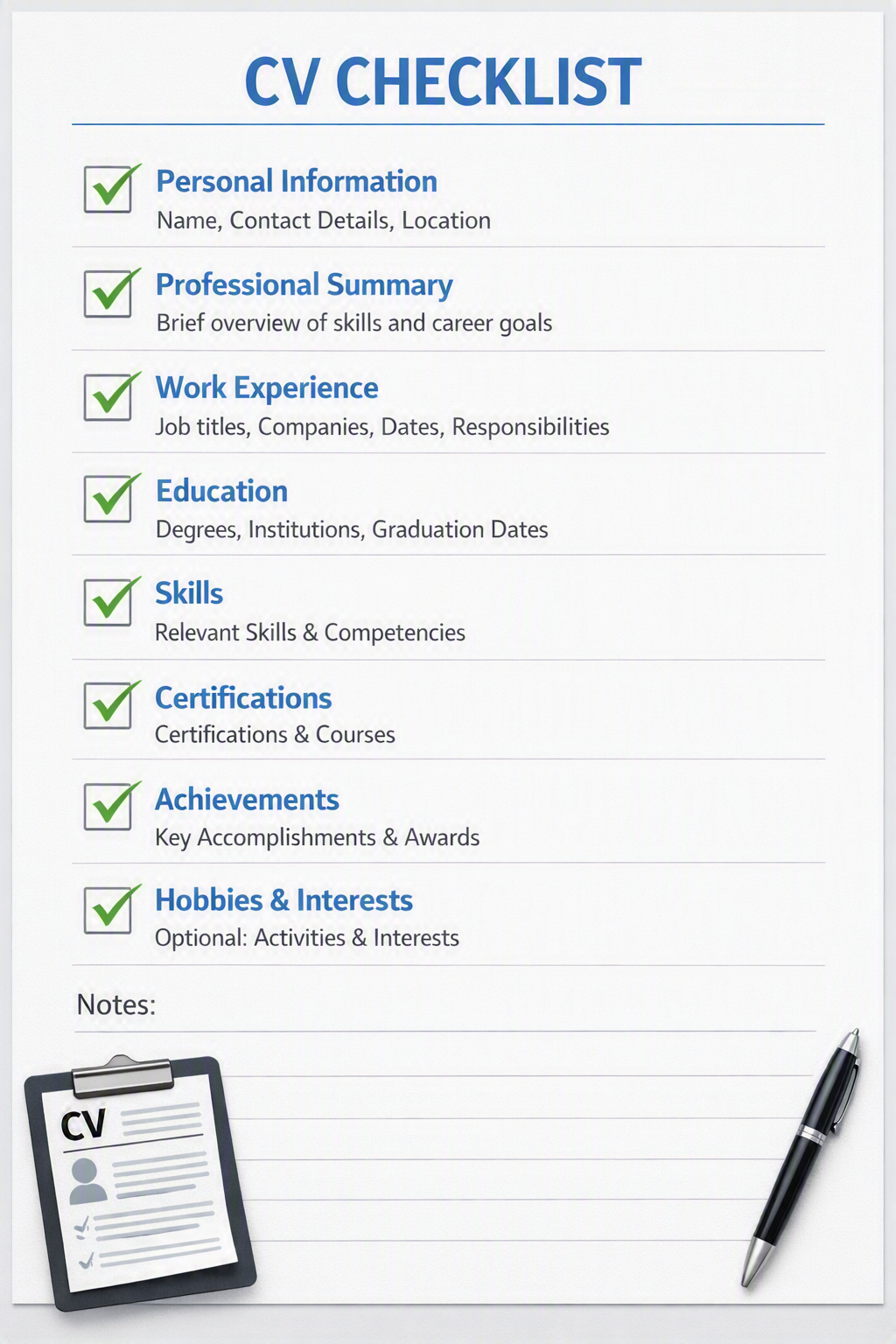
Personal Information
Name, Contact Details, Location
Professional Summary
Brief overview of skills and career goals
Work Experience
Job titles, Companies, Dates, Responsibilities
Education
Degrees, Instructions, Graduation Dates
Skills
Relevant Skills & Competencies
Certifications
Certifications & Courses
Achievements
Key Accomplishments & Awards
Hobbes & Interests
Optional: Activities & Interests

Consider what has been offered to you and then update your CV.
Now visit the WhatsApp Community channel to see what Jobs have been posted today.